Sludge Treatment
Sludge treatment and disposal are key stages in the design and operation of all wastewater treatment plants. The two main objectives of sludge treatment before final disposal are to reduce its volume and stabilise organic materials.
Stabilised sludge has no unpleasant odour and can be handled safely, without causing nuisance or posing a risk to human health or the environment. Reduced sludge volume directly contributes to lower transport, pumping, and storage costs, significantly optimising plant operating processes.
In addition, properly treated sludge can also have added value, as in certain cases it may be used as a secondary raw material, for example in agriculture or energy production, in accordance with applicable regulations and environmental protection standards.


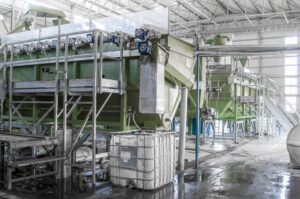
Automation of the sludge dewatering process enables continuous, reliable, and efficient system operation, with minimal operator involvement and maximum process control. Depending on plant capacity, sludge characteristics, and the required dry solids content, the following technologies are applied:
- Belt filter press (continuous belt filter)
- Screw press (high-capacity mechanical dewatering at high flow rates)
- Chamber filter press (pressure filtration with discontinuous operation)